Culture
For centuries, Persian poetry has found a loving audience among Hebrew readers. The verses of Omar Khayyam and Hafez — on love, wine, wisdom and the fleeting nature of life — have crossed language and borders to become part of Israel's literary landscape.
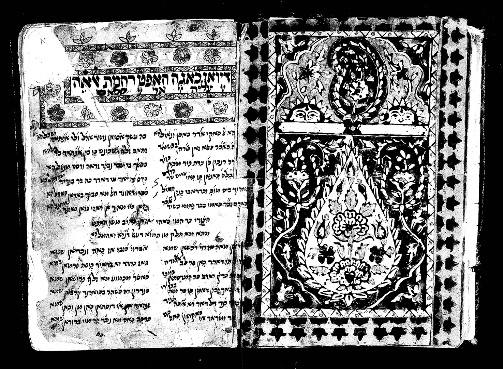
The Rubaiyat of Omar Khayyam in Hebrew
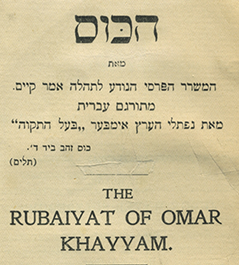
One of the earliest Hebrew translations of the Rubaiyat was made by Naphtali Herz Imber — the poet best known for writing the words of “Hatikvah,” which became Israel's national anthem. His translation was published in New York around 1905.
The title page proudly describes the work as the poems of the famous Persian poet Omar Khayyam, rendered into Hebrew by “the author of Hatikvah” — a remarkable meeting of Persian and Hebrew poetic traditions.
The Poems of Hafez
Hafez of Shiraz, the beloved 14th-century master of the ghazal, holds a place in nearly every Iranian home. Selected poems of Hafez have been translated into Hebrew by several Israeli scholars and poets, introducing new generations of readers to his lyrical, mystical verse.
These translations are a quiet testament to a cultural friendship that long predates modern politics — one built on shared admiration for beauty, wisdom and the written word.
A shared heritage
The Jewish community of Iran is one of the oldest in the world, with roots reaching back more than 2,500 years. Today Israel is home to a large community of Iranian-born Jews and their descendants, who carry Persian language, music, cuisine and traditions into everyday Israeli life.
Through art, music, literature, film and heritage projects, the Society celebrates this shared humanity and invites Iranians and Israelis to rediscover each other's cultures.
Want to get involved?